
Agnes Mitchell
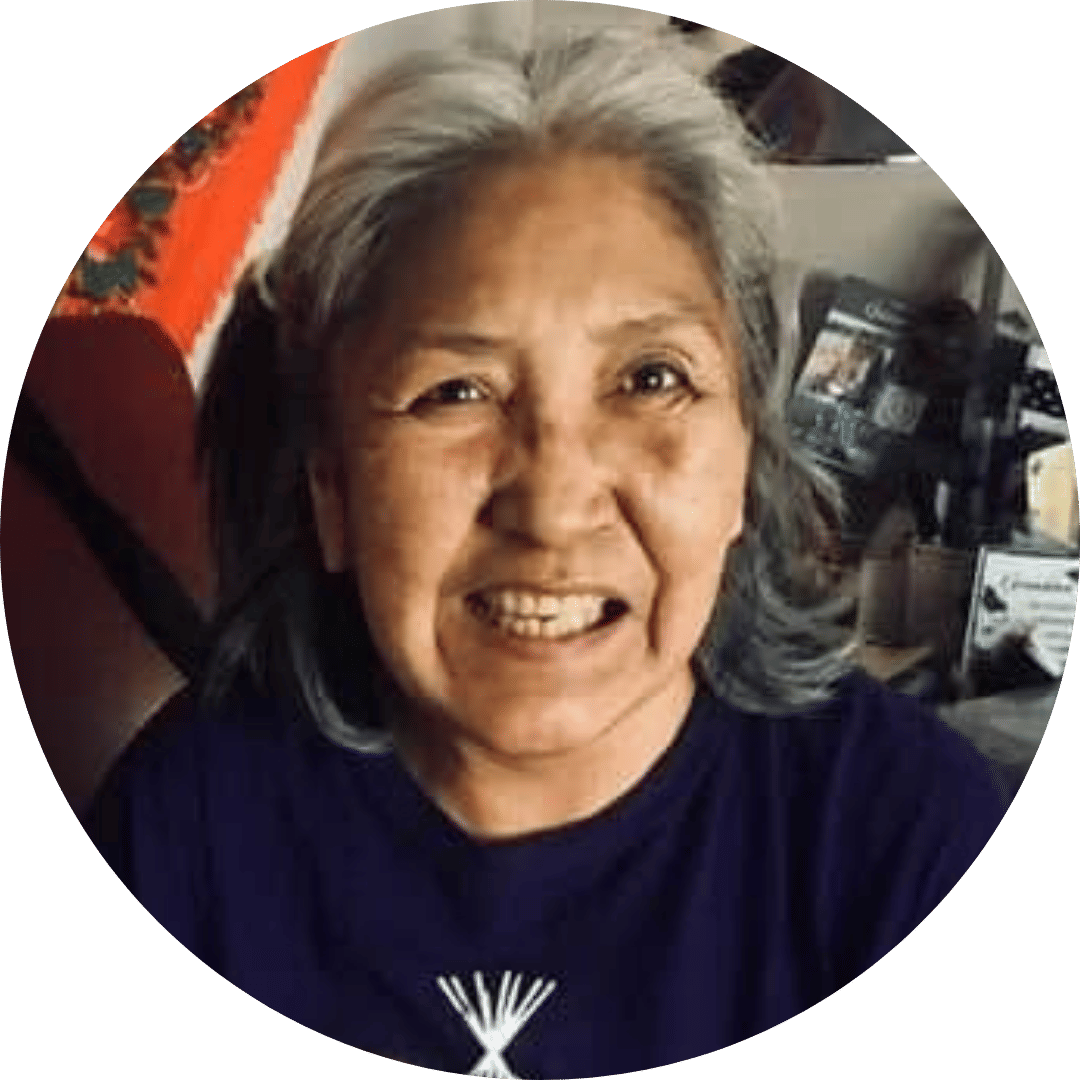
Agnes Julienne Mitchell is a Gwichyà Gwich'in Elder originally from Tsiigehtchic and Dachan Choo Gèhnjik (Tree River) in the Northwest Territories, now living in Edmonton, Alberta. A former residential school student of Grollier Hall, Agnes is a Dinjii Zhuh Ginjìk language speaker, accomplished seamstress, and lifelong beader, whose work is deeply connected to the Land, her family, and Dinjii Zhuh ways of knowing.
From an early age, Agnes learned by watching and working alongside her family on the Land. Sewing, beading, fishing, preparing food, and caring for others were part of everyday life. Those teachings continue to shape both her artwork and life today. Through her beadwork, Agnes carries forward the patience, care, and attention that were passed down to her across generations.
Agnes's work reflects the enduring relationships between Land, family, language, and identity. Each piece is created slowly and deliberately, honouring the places, people, and memories that continue to guide her despite the disruptions caused by residential schooling.
From an early age, Agnes learned by watching and working alongside her family on the Land. Sewing, beading, fishing, preparing food, and caring for others were part of everyday life. Those teachings continue to shape both her artwork and life today. Through her beadwork, Agnes carries forward the patience, care, and attention that were passed down to her across generations.
Agnes's work reflects the enduring relationships between Land, family, language, and identity. Each piece is created slowly and deliberately, honouring the places, people, and memories that continue to guide her despite the disruptions caused by residential schooling.
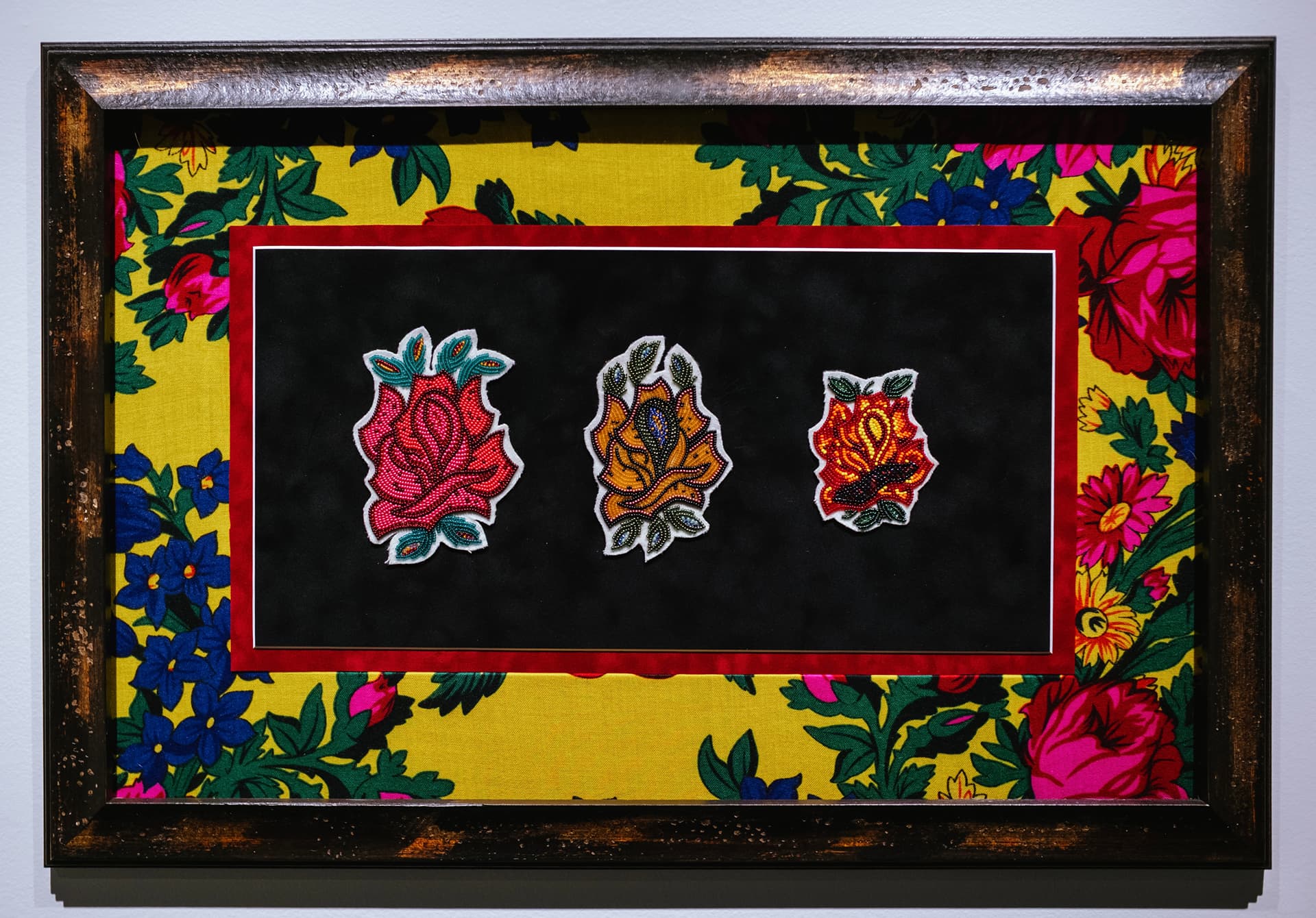
Tree River Special, 2026
Beads on white stroud
"This rose came to me while I was sewing at Dachan Choo Gèhnjik (Tree River), the place my family has fished for many generations. I was sitting in my sewing spot when I noticed an old tea towel hanging in the kitchen. At first I thought I was looking at dirt or ash, but every time I looked at it, I saw the shape of a rose. I finally drew it exactly as I saw it. Since then, I have called it my Tree River Special.
Tree River is a truly special place. Over the years, we've had many visitors there. Some remember it has a fish camp, and others as the place where they met my grandmother Julienne Andre. But Tree River is where I grew up. My father, Hyacinthe Andre, trapped through the Tree River area during the winter, and our family lived by the seasons of the Land. It is where I learned from my family, and where people worked together, shared food, spoke our language, and cared for one another. Those memories stayed with me, even after I was taken away to residential school.
For me, this rose represents love, family, and strength. It reminds me that our connections to home and to one another can never be completely taken away. Bead by bead, I carry those teachings forward.
I created this piece in honour of the children, families, and Survivors whose lives were changed by residential schooling, and in recognition that our cultures, our memories, and our love for the Land continue to live on."
Beads on white stroud
"This rose came to me while I was sewing at Dachan Choo Gèhnjik (Tree River), the place my family has fished for many generations. I was sitting in my sewing spot when I noticed an old tea towel hanging in the kitchen. At first I thought I was looking at dirt or ash, but every time I looked at it, I saw the shape of a rose. I finally drew it exactly as I saw it. Since then, I have called it my Tree River Special.
Tree River is a truly special place. Over the years, we've had many visitors there. Some remember it has a fish camp, and others as the place where they met my grandmother Julienne Andre. But Tree River is where I grew up. My father, Hyacinthe Andre, trapped through the Tree River area during the winter, and our family lived by the seasons of the Land. It is where I learned from my family, and where people worked together, shared food, spoke our language, and cared for one another. Those memories stayed with me, even after I was taken away to residential school.
For me, this rose represents love, family, and strength. It reminds me that our connections to home and to one another can never be completely taken away. Bead by bead, I carry those teachings forward.
I created this piece in honour of the children, families, and Survivors whose lives were changed by residential schooling, and in recognition that our cultures, our memories, and our love for the Land continue to live on."